
The 7th Symposium on
Chinese Archaeology and Cultural Research
(CACR 2023)
Call for Papers Now!
June 28, 2023
Bangkok, Thailand
June 28, 2023
Bangkok, Thailand
| Overview | Submission | Program | Committees |
| Session 1: Emerging Horizons: New Faunal Discoveries and Their Significance in Chinese Archaeology |
|
In this exciting session, we will explore recent discoveries of
previously unknown creatures from ancient China, focusing on how these
findings are reshaping our understanding of China's diverse
prehistoric ecosystems. Participants will delve into the processes
behind these discoveries, from initial excavation to the scientific
methods used for identification and interpretation. We will highlight some of the most fascinating new species discoveries, such as the Yangzisaurus gigas and Euryyangzia floriformis, and discuss their ecological, evolutionary, and cultural significance. This session will also shed light on the interdisciplinary techniques employed to unearth, reconstruct, and analyze these ancient creatures, merging traditional archaeological methods with state-of-the-art technology. Through this session, attendees will gain a deeper understanding of China's rich biological past and the importance of ongoing archaeological investigations in unveiling this dynamic history. This session welcomes archaeologists, paleontologists, anthropologists, and all who are interested in the fascinating world of ancient fauna and their significance in our understanding of the past. |
| Yangzisaurus gigas: A Novel Marine Reptile from the Late Triassic of the Ancient Yangzi Sea |
| Xinyi Zhang, Li Mei, Michael J. Benton, and Ryosuke Motani. |
|
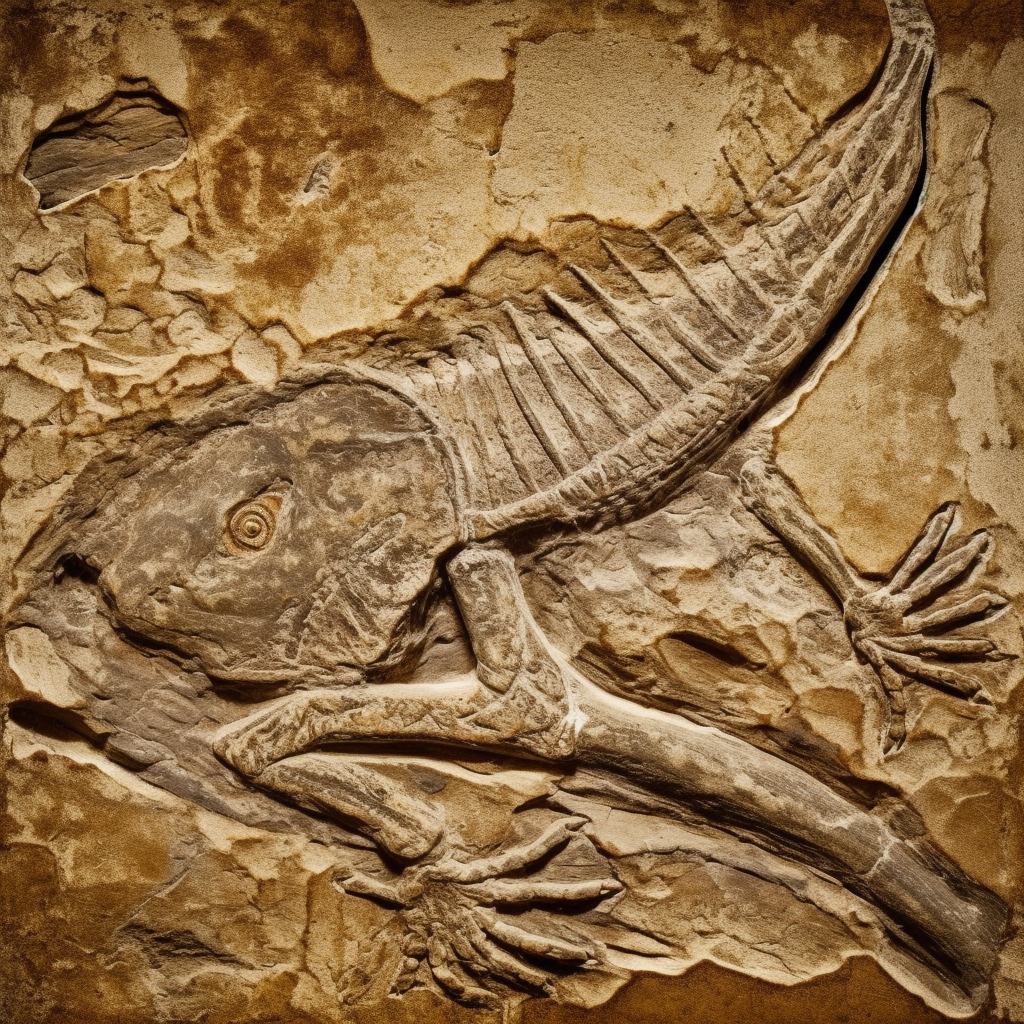
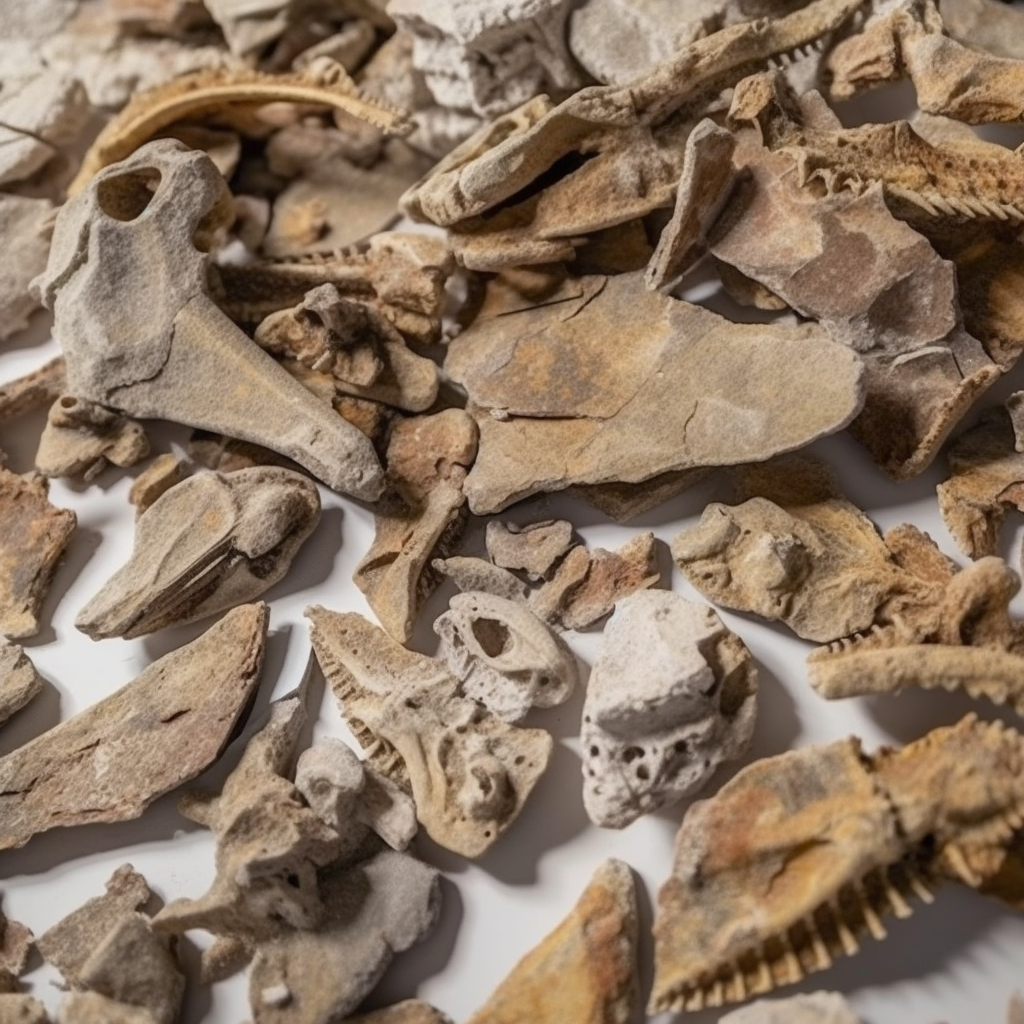
The discovery of a new large marine reptile, Yangzisaurus gigas, from
the Late Triassic period, in the ancient Yangzi sea deposits,
represents a significant addition to our understanding of the marine
reptile diversity and paleoecology during this time. The
well-preserved fossil specimen exhibits a unique combination of
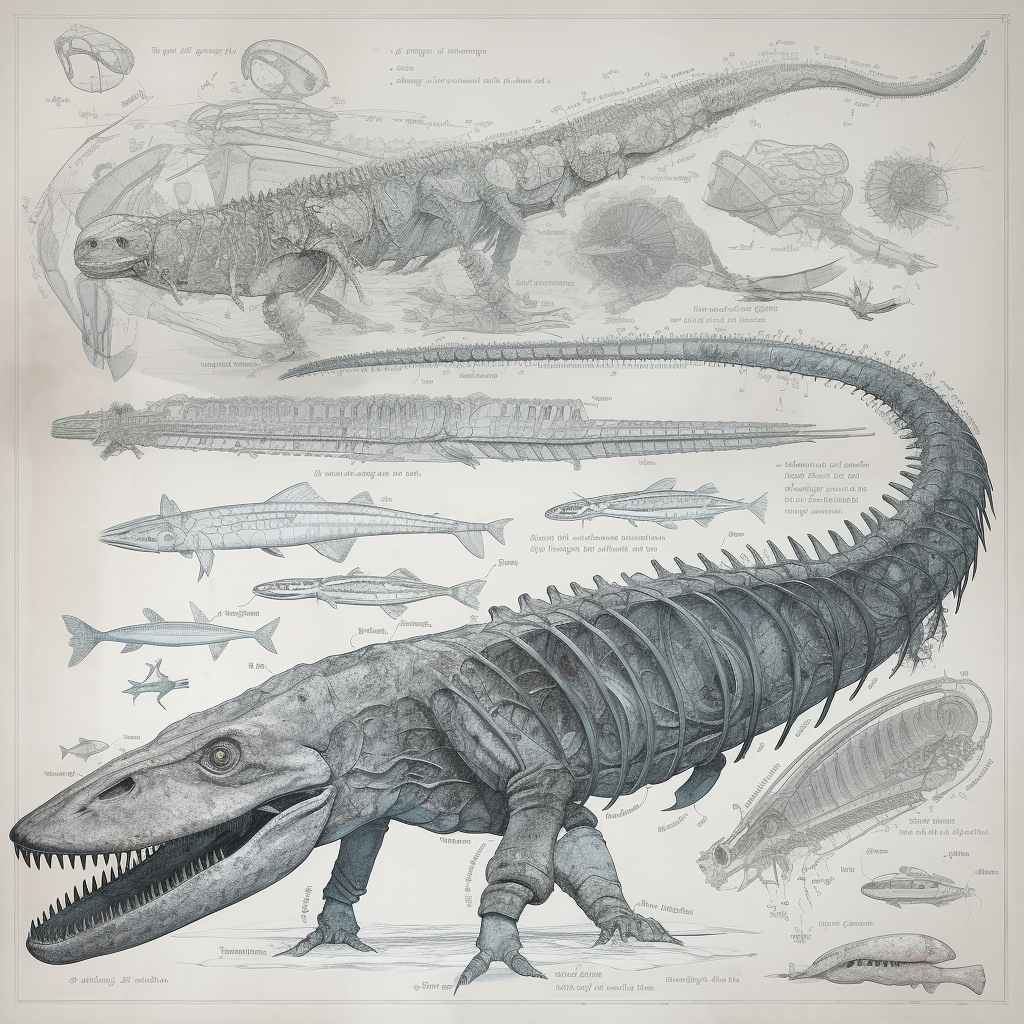
features, including a streamlined, fusiform body, a long, narrow snout
with sharp, conical teeth, large paddle-like flippers, and a
crescent-shaped tail fin. The coloration pattern, inferred from
preserved pigment cells, suggests countershading as an effective
camouflage strategy. Phylogenetic analysis places Yangzisaurus gigas
within a previously unrecognized clade of marine reptiles, offering
new insights into the evolution and radiation of these ancient
predators. The paleoecological implications of this discovery
highlight the significance of the ancient Yangzi sea as a diverse and
dynamic marine ecosystem, shaping the evolutionary history of marine
reptiles during the Late Triassic. Further exploration of the ancient
Yangzi sea deposits holds the potential to uncover additional taxa and
deepen our understanding of marine life during this critical period of
Earth's history. * More information about the new creature Yangzisaurus gigas seeing wikipedia |


|
|
|
|
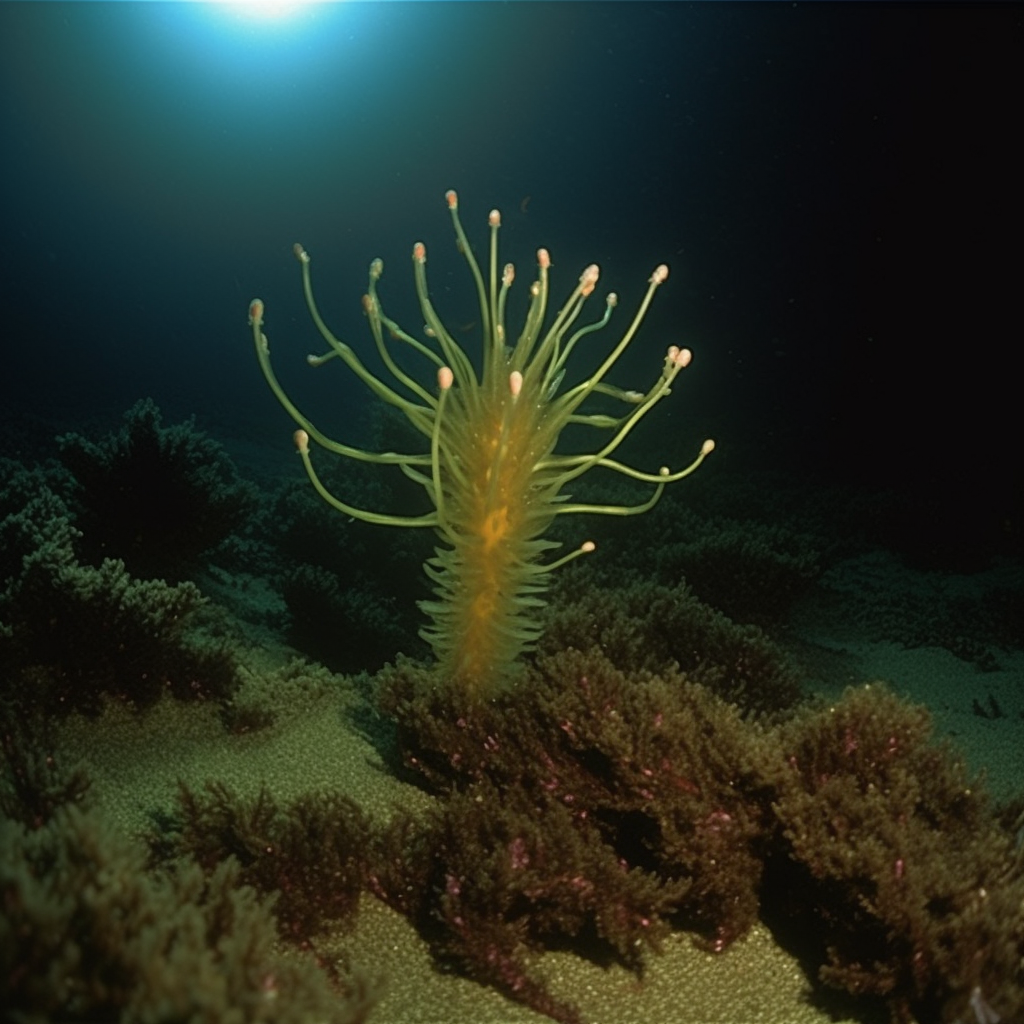
| Floral Fauna of the Deep: Discovery of Euryyangzia floriformis, a New Soft-Bodied Marine Invertebrate from the Ancient Yangzi Sea |
| Junhua Chen, Susan M. Gaines, and Maria E. McNamara. |
|
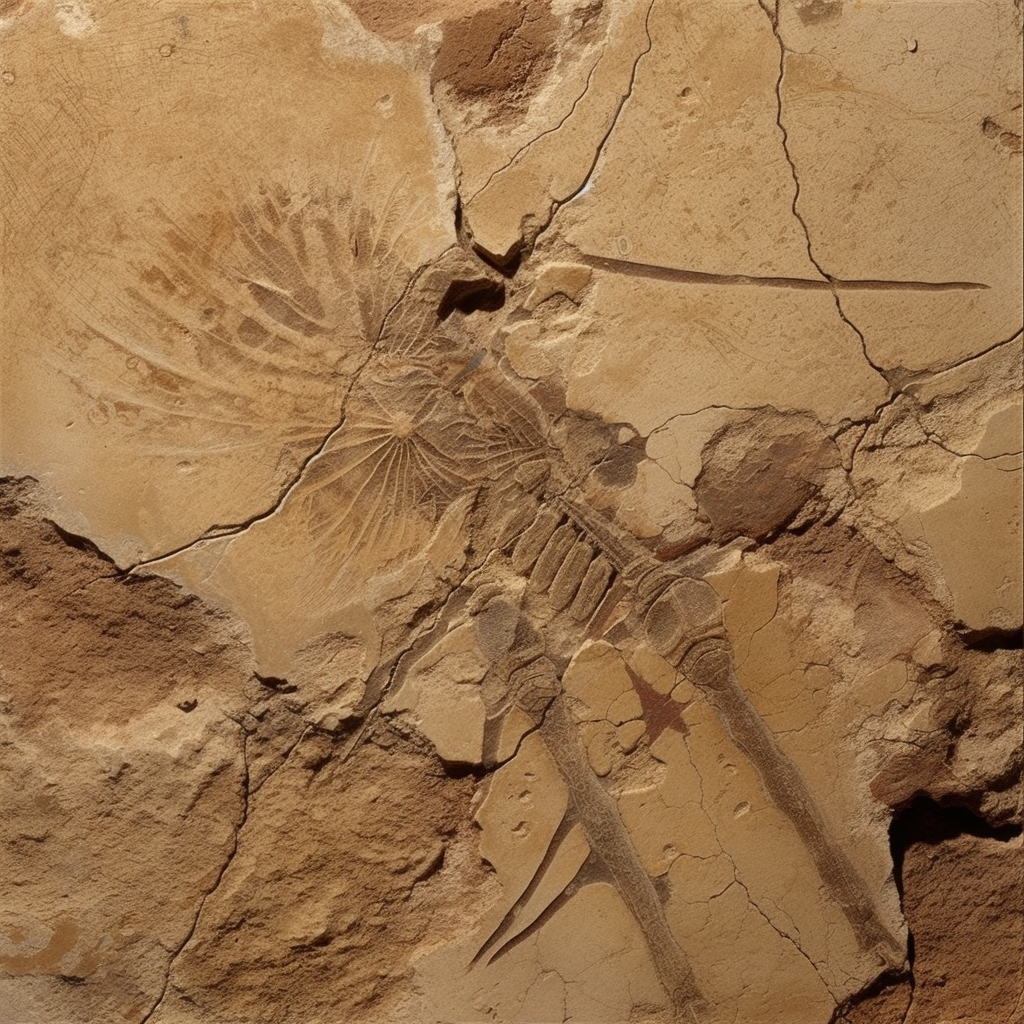
The study of fossil deposits in the ancient Yangzi sea has led to the
discovery of a previously unknown soft-bodied marine invertebrate,
Euryyangzia floriformis. Bearing a striking resemblance to a flower,
this organism possesses a central mouth surrounded by numerous
tentacles, indicative of a close phylogenetic relationship to modern
sea anemones and corals. Euryyangzia floriformis is characterized by
its propensity to form large, visually stunning colonies on the
seafloor, evoking the image of an underwater garden. Analysis of
fossil material reveals that this unique organism exhibits a diverse
range of reproductive strategies, including both sexual and asexual
reproduction, which appear to be influenced by environmental factors.
The discovery of Euryyangzia floriformis enhances our understanding of
the rich biodiversity and intricate ecological dynamics that defined
the ancient Yangzi sea. Moreover, it offers valuable insights into the
evolutionary history of soft-bodied marine invertebrates and the
driving forces behind their diversification throughout the region's
geological past. * More information about the new creature Euryyangzia Floriformis seeing wikipedia |
|
|
|
|
| Session 2: Unearthing the Secrets of Prehistoric Art and Symbolism |
|
This fascinating session focuses on the rich and complex world of
prehistoric art and symbolism in ancient China. We will discuss the
latest findings, from intricate cave paintings and pottery motifs to
carved figurines and architectural symbolism, and how they are
reshaping our understanding of ancient Chinese cultures. This session will explore the thematic continuity, stylistic evolution, and cultural contexts of these artistic expressions, and their significance in representing societal beliefs, rituals, and worldview. Through examining these symbolic artifacts, we will highlight the creativity, imagination, and cultural richness of our ancestors. The session aims to foster a deep appreciation for prehistoric art and symbolism, and to promote an understanding of their vital role in the study of ancient civilizations. The session welcomes researchers, art historians, and all interested in the captivating interplay of art, symbolism, and archaeology. |
| Visual Narratives of the Past: Unveiling Extraordinary Prehistoric Art and Symbolism in the Ancient Yangtze River Basin |
| Wang Lei, Zhao Xin, Zhang Hui, and Liu Xia. |
| The Ancient Yangtze River Basin has long been celebrated for its rich cultural heritage. In this study, we present a groundbreaking discovery of previously unknown prehistoric art and symbolism within the region. This exceptional find includes a diverse array of cave paintings, pottery motifs, and carved figurines that provide unprecedented insights into the cognitive abilities, social organization, and cultural practices of early human populations in the Ancient Yangtze River Basin. Through a multidisciplinary approach, we analyze the iconography, techniques, and materials employed, uncovering the thematic continuity and stylistic evolution of the artistic expressions. Our research highlights the remarkable creativity and symbolic complexity of the ancient societies in the region, contributing to a deeper understanding of the development of human culture and cognition. |
Reviewer Comments:
|
|
|
| Session 3: Tracing Cultural Connections: Interactions and Exchanges in Ancient China |
|
This session aims to explore the myriad cultural connections that
existed within ancient China and its neighbors. Participants will
explore how intercultural exchanges have influenced the development of
civilizations across the region, examining evidence from trade goods,
artifacts, linguistic data, and more. Through a series of case studies, we will discuss how these connections have shaped social structures, technological advancements, artistic expressions, and belief systems. The session will also explore how archaeology, coupled with historical records and other interdisciplinary approaches, can shed light on the patterns of cultural diffusion and interaction. By the end of this session, attendees will have a better understanding of the interconnectedness of ancient cultures, and the role of cultural exchanges in shaping societies and civilizations. |
| Crossing Boundaries: Tracing the Cultural Connections between the Ancient Yangtze River Basin and the Indus Valley Civilization |
| Li Jing, Ravi Prakash Gupt, Ma Yan, and Rajesh Kumar. |
| The cultural landscape of the ancient world was shaped by the interactions between diverse societies. This study investigates the cultural connections between the Ancient Yangtze River Basin culture in China and the Indus Valley Civilization in present-day Pakistan and northwest India. Through a multidisciplinary approach, combining archaeology, linguistics, and paleobotany, we uncover evidence of trade, technological exchange, and shared cultural practices between these two remarkable civilizations. Our findings demonstrate the presence of an extensive network of communication, the transfer of agricultural innovations, and the mutual influence of artistic and architectural styles. This research highlights the significant role of cross-cultural connections in the development of the Ancient Yangtze River Basin and the Indus Valley Civilization, providing new insights into the complexity of ancient global interactions. |
Reviewer Comments:
|
|
|
| Session 4: Innovative Methodologies: New Frontiers in Chinese Archaeological Science and Technology |
|
This enlightening session will delve into the cutting-edge
methodologies and technologies revolutionizing the field of Chinese
archaeology. Participants will discover how advanced techniques,
ranging from 3D modeling and digital reconstruction of archaeological
sites to isotopic analysis and dating methods, are refining our
understanding of China's rich past. We will explore case studies where
these methods have provided novel insights and opened up new avenues
of research, such as the reconstruction of ancient ecosystems and the
deciphering of complex cultural artifacts. The session will emphasize the importance of interdisciplinary cooperation in archaeological research, and how the merging of traditional archaeology with fields like computer science, chemistry, and physics can lead to groundbreaking discoveries. Attendees will gain a comprehensive understanding of the current trends and future prospects in archaeological science and technology as applied to Chinese archaeology. |
| FossilRevive: A Deep Learning Approach for Accurate Fossil Reconstruction and Life-Like Modeling of Extinct Species |
| Chen Wei, Yu Jie, Li Xiang, and Wang Qian. |
| The reconstruction of fossils and generation of life-like models of extinct species play a crucial role in understanding the morphology, biology, and evolutionary history of ancient organisms. In this paper, we propose FossilRevive, an innovative deep learning-based algorithm for the accurate reconstruction of fossils and generation of realistic 3D models of extinct species. FossilRevive employs a combination of convolutional neural networks (CNNs) and generative adversarial networks (GANs) to process partial or damaged fossil remains, infer missing data, and reconstruct complete skeletal structures. Additionally, the algorithm incorporates biomechanical constraints, soft tissue simulations, and coloration patterns derived from related extant species, resulting in highly realistic life-like models. We demonstrate the efficacy of FossilRevive through extensive experimentation and comparisons with traditional reconstruction methods. This research presents a groundbreaking tool for paleontologists and biologists, enabling deeper insights into extinct species and their ecological roles, while also fostering the exploration of evolutionary processes and biological diversity across time. |